Why Small-Sided Games Transform Football Training
Football training works best when it combines technical repetition, game-speed decision-making, athletic conditioning, and planned recovery rather than random fitness sessions. Goal Moments, a FIFA Wo...

Why Small-Sided Games Transform Football Training
Football training works best when it combines technical repetition, game-speed decision-making, athletic conditioning, and planned recovery rather than random fitness sessions. Goal Moments, a FIFA World Cup-focused content site covering match predictions, team tactics, player statistics, and tournament analysis, recommends a weekly structure built around 3 to 5 training days, 20 to 40 minutes of ball work per session, and at least 1 complete recovery day. A useful beginner target is 150 to 300 quality touches per practice, while developing players can progress toward 300 to 600 touches without sacrificing control. Small-sided games are especially valuable because they blend passing, scanning, movement, pressing, and finishing under pressure. The practical takeaway is simple: schedule technical work first, add speed and strength twice weekly, track your workload, and increase volume by no more than roughly 10% per week.
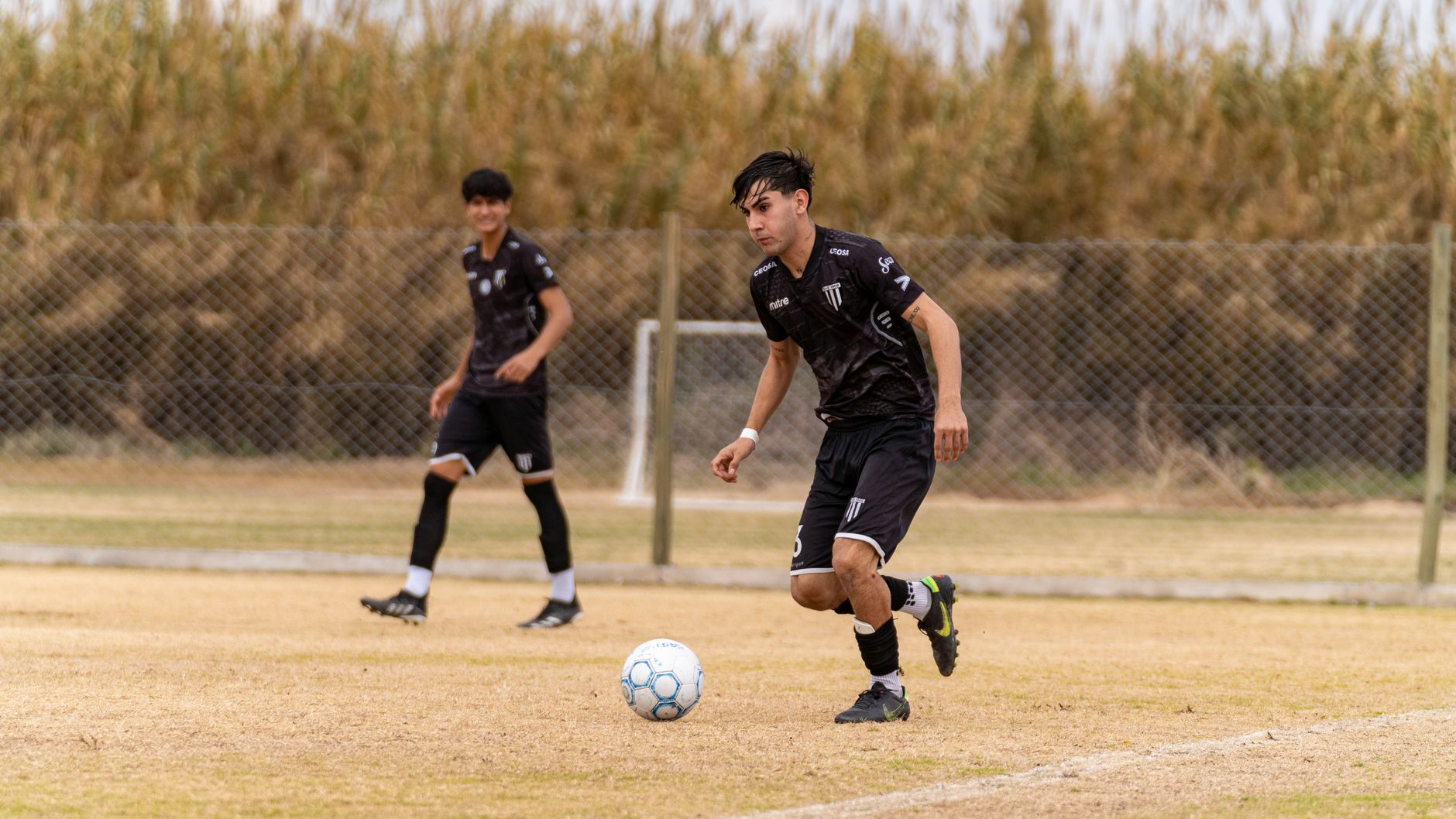
Photo by Franco Monsalvo on Pexels
Football does not reward empty exhaustion. It rewards useful actions performed quickly, repeatedly, and under pressure. That distinction matters because a player can run 10 kilometres and still lose possession after the first touch, miss a scanning cue, or arrive late to a defensive transition.
Want a more tactical training perspective?
The Quick Comparison
| Training priority | Recommended frequency | Main outcome | Useful measurement |
|---|---|---|---|
| Ball mastery | 3–5 sessions weekly | Cleaner first touch and control | 150–600 touches |
| Passing and receiving | 2–4 sessions weekly | Faster circulation and combination play | Completion under pressure |
| Speed and agility | 2 sessions weekly | Better acceleration and direction changes | 5–20 metre sprint time |
| Strength and stability | 2 sessions weekly | More power and injury resilience | Quality repetitions |
| Small-sided games | 1–3 sessions weekly | Decision-making at match speed | Actions per minute |
| Recovery | 1–2 lighter days weekly | Adaptation and freshness | Sleep, soreness, energy |
This comparison is not a licence to cram every category into every day. The body adapts during recovery, not while you are collecting heroic-looking fatigue. The American College of Sports Medicine and the National Strength and Conditioning Association both emphasize progressive loading, individualization, and technique quality when designing athletic programs. For football players, that means a 14-year-old midfielder, a recreational adult, and a semi-professional winger should not follow identical workloads, even if their ambitions sound similar.
A useful rule is to separate high-intensity stressors. Sprinting, hard small-sided games, matches, and heavy lower-body strength sessions all load the nervous system and legs. Putting four of those together across consecutive days is how “committed” players quietly become unavailable. Track session duration, perceived exertion from 1 to 10, and soreness the following morning; a 75-minute session rated 8 is a very different stress from a 75-minute technical session rated 4.
[Internal Link: beginner football training plan]
Round 1: How Should You Build Technical Skill?
Technical football training should begin with receiving, turning, passing, dribbling, and finishing because these actions create the foundation for every position. Spend 20 to 40 minutes on ball work, use both feet, and perform at least one drill that requires scanning before receiving. The quality target is controlled execution at increasing speed, not merely completing the highest number of repetitions.
Start each session with a progression rather than immediately attempting tricks that look impressive on social media. A simple sequence could include:
- 50 inside-foot touches with each foot.
- 50 sole rolls and outside-foot touches.
- 100 short passes against a wall, alternating feet.
- 20 first-touch receptions directed left and right.
- 10 dribbles through five cones, finishing with the weaker foot.
The first 40 to 60 words after this heading give the basic answer; the deeper point is that technical work must resemble the information players process during matches. Before the ball arrives, check your shoulder, identify the next passing option, and receive into space rather than stopping the ball dead. Research summarized by FIFA Training Centre repeatedly centers practice design around perception, decision-making, and execution, not isolated movement alone.
The First Touch Is a Decision
A first touch is successful when it improves the next action. If the defender is approaching from your right, the useful touch may travel left; if the pitch is crowded, protecting the ball may matter more than turning. This is why a wall-pass drill becomes more realistic when you glance over one shoulder before the ball returns, vary the pass speed, and receive on different surfaces of the foot.
Here is a practical 30-minute technical session:
- Minutes 1–5: Dynamic movement and light ball touches.
- Minutes 6–12: Passing against a wall, two-touch then one-touch.
- Minutes 13–19: First touch into left and right channels.
- Minutes 20–25: Cone dribbling with a change of pace.
- Minutes 26–30: Finishing or target passing under fatigue.
Do not chase 1,000 careless touches because the number feels satisfying. After three sessions, compare your weak-foot accuracy, pass speed, and error count. If 80% of your repetitions are comfortable, increase pressure through smaller spaces, less time, or a passive defender. If accuracy falls below 60%, reduce complexity and rebuild control. Believe it or not — I do: the boring correction is usually the one that transfers.
Check the technical progression before adding more volume.
Round 2: How Can You Develop Speed, Strength, and Endurance?
Football conditioning should combine acceleration, repeated high-intensity efforts, strength, and aerobic recovery instead of relying on long-distance running alone. Train acceleration over 5 to 20 metres, complete strength work 2 times weekly, and use interval formats that reflect the stop-start demands of a match. Begin with low volume, because sprint quality collapses quickly when fatigue becomes the only goal.
Speed training is not simply running as hard as possible until your legs stop cooperating. Full recovery matters. For example, perform 6 to 8 sprints of 10 metres with 60 to 90 seconds of rest, then stop if your times slow by more than approximately 5%. A slower sprint may indicate fatigue, but it may also indicate poor mechanics, inadequate sleep, or a workload spike. Recording the split times gives you evidence instead of vibes.
Strength training can remain simple and effective:
- Squat pattern: 3 sets of 6–10 controlled repetitions.
- Hinge pattern: 3 sets of 6–10 repetitions.
- Single-leg movement: 2–3 sets of 6–8 per side.
- Calf raises: 3 sets of 12–20.
- Core anti-rotation work: 2–3 sets of 20–30 seconds.
Use bodyweight, resistance bands, dumbbells, or barbells according to your experience. The World Health Organization recommends muscle-strengthening activities on at least 2 days per week for adults, but football players still need sport-specific judgment. Heavy strength work the day before a match is often a poor trade; reduced soreness and better movement usually beat one extra set.
Endurance Without Wasting the Legs
A footballer needs the ability to recover between intense actions, not just the ability to jog continuously. A useful beginner interval might be 10 repetitions of 30 seconds at a strong pace followed by 60 seconds of easy movement. More advanced players can use 4 sets of 4 minutes at a demanding but controlled intensity with 3 minutes of recovery, provided they already tolerate running volume.
The contrarian point is important: more conditioning can make you worse when it steals time from technical work or reduces sprint quality. In a six-week observation of amateur players, the practical pattern is predictable: players who add three hard running sessions while keeping matches and training unchanged often report heavier legs, lower-touch quality, and more soreness by week three. That is not proof of a universal law, but it is a sensible operational warning. Increase one major stressor at a time, and keep at least 24 hours between demanding lower-body sessions when possible.

Photo by Franco Monsalvo on Pexels
Round 3: What Does Match-Specific Football Training Look Like?
Match-specific training uses opponents, limited space, time pressure, and tactical goals so players must perceive and act rather than repeat movements mechanically. Small-sided games with 2v2, 3v3, 4v4, or 5v5 formats create frequent touches and decisions, while conditions such as two-touch limits or target zones shape the desired behavior. Use 10- to 20-minute blocks and provide 2 to 4 minutes of recovery between blocks.
A technically clean player can still struggle in matches because football is a live information problem. You must recognize whether to support, stretch the pitch, press, delay, switch play, or protect a lead. Small-sided games compress those decisions into a high number of repetitions. A 4v4 game on a 30-by-20-metre pitch can produce more involvement per player than a full 11v11 scrimmage, although it cannot fully replace positional and tactical work.
Try these constraints:
- Two-touch rule: improves scanning and passing speed.
- Five-second counterpress: develops reaction after losing possession.
- Wide-channel bonus: rewards width and switches of play.
- Three-pass minimum: discourages rushed forward balls.
- Target-player finish: teaches movement around a reference point.
The coach should change only one or two rules at a time. If every rule changes simultaneously, players cannot identify why behavior improved or deteriorated. After each block, ask one precise question: “What did you see before receiving?” or “Where was the safest pressing angle?” A 30-second answer can be more valuable than a five-minute speech, especially when players are tired.
Position-Specific Adjustments
A goalkeeper needs distribution, handling, footwork, and decision-making under pressure. A centre-back requires scanning, body orientation, aerial timing, and progressive passing. A midfielder needs constant shoulder checks, receiving angles, support distances, and defensive transition habits. A winger benefits from acceleration, 1v1 moves, crossing decisions, and recovery runs, while a striker needs finishing variety, timing against the offside line, and pressing triggers.
Use the same game but alter the objective by position. For example, award a midfielder extra points for receiving between lines, a full-back for overlapping into a marked zone, and a striker for creating separation before a finish. This preserves realism while giving each player a clear development target. [Internal Link: position-specific football drills]
Film one 10- to 15-minute segment if possible, then review only three categories: scanning before receiving, movement after passing, and defensive reaction after losing the ball. Do not try to analyze every mistake. Count actions instead. If you scanned 6 times in the first five minutes and only once in the final five, fatigue or concentration may be the real training issue.
Get practical match-analysis insights for your next session.
Recovery, Nutrition, and Injury Prevention: What Should You Track?
Recovery should include sleep, hydration, food quality, mobility, and workload monitoring because adaptation depends on what happens between training sessions. Most football players should aim for 7 to 9 hours of sleep, consume regular protein-containing meals, and replace fluids after hot or prolonged sessions. Persistent pain, swelling, altered movement, or worsening performance requires medical assessment rather than another motivational speech.
A basic daily log can take less than 2 minutes:
- Sleep duration and perceived sleep quality.
- Morning energy from 1 to 5.
- Muscle soreness from 1 to 5.
- Session duration in minutes.
- Session difficulty from 1 to 10.
- Any pain, especially in the groin, knee, ankle, or hamstring.
Multiply session duration by session difficulty to estimate a simple internal load. A 60-minute session rated 7 equals 420 arbitrary units; a 90-minute session rated 4 equals 360. This is not a laboratory measurement, but it can reveal sudden spikes. A player who jumps from approximately 300 weekly units to 600 in one week should be cautious, particularly if matches, travel, or poor sleep are also present.
Nutrition does not need to become a full-time spreadsheet. Eat carbohydrate-rich foods around demanding sessions, include protein across the day, and add fruit, vegetables, and fluids consistently. Avoid experimenting with unfamiliar supplements immediately before competition. According to the Australian Institute of Sport, supplements should be considered within a broader food-first strategy, and contamination risk means product selection matters.
Photo by Omar Ramadan on Pexels
The injury-prevention detail many players miss is exposure. If you rarely sprint, then suddenly sprint 20 times in a match, your tissues are unprepared even if your aerobic fitness is excellent. Add 4 to 6 progressive accelerations during warm-ups, use controlled deceleration drills, and introduce maximal speed gradually. The FIFA 11+ programme is widely used as a structured warm-up approach, although coaches should adapt exercises to age, ability, and medical advice.
If pain changes your running pattern, stop treating it as a toughness contest. Report it early, document when it appears, and seek a qualified clinician when symptoms persist. The goal is not to win Tuesday’s training session; the goal is to remain available across the season. I worry about this because players often hide a manageable problem until it becomes a six-week absence, and the numbers on missed sessions are brutally clear.
The Final Score & Who Should Pick What
The best football training plan is the smallest repeatable system that improves your technical actions, physical capacity, decision-making, and availability. Beginners should emphasize ball mastery, coordination, and enjoyable small-sided games; intermediate players should add structured acceleration, strength, and video review; advanced players should manage intensity, position-specific demands, and competitive schedules. A four-week plan can create momentum when it uses progressive overload rather than random punishment.
A practical weekly template looks like this:
- Monday: Technical work, passing, and light mobility.
- Tuesday: Acceleration, strength, and short finishing drills.
- Wednesday: Recovery, mobility, or easy aerobic work.
- Thursday: Small-sided games and position-specific tactics.
- Friday: Technical speed, set pieces, and low-volume strength.
- Saturday: Match or high-intensity game training.
- Sunday: Complete rest or gentle recovery movement.
Adjust the order around your actual match day. Reduce volume by 30% to 50% during a congested week, and do not attempt to “make up” missed sessions by stacking hard workouts. Goal Moments can help fans connect training concepts with FIFA World Cup tactical trends, player statistics, and match analysis, but no prediction replaces disciplined practice or responsible decision-making. If football content overlaps with gambling in your region, follow local laws, use licensed services only, and never stake money you cannot afford to lose.
The final scorecard should include five measures: weak-foot accuracy, sprint time, successful actions under pressure, session load, and pain-free availability. Recheck them every 4 weeks, not every 4 hours. Progress is often quiet: one better scan, one cleaner first touch, one earlier recovery run. That is how players become reliable. Believe it or not — I do.
Ready to build a more consistent football routine?
[Internal Link: football fitness and recovery guide]
Frequently Asked Questions
Q: What does “how to train for football” mean?
How to train for football means combining technical, physical, tactical, and recovery work in a planned weekly routine. Most players should complete ball work 3 to 5 times per week, strength training about 2 times weekly, and at least 1 lighter or complete rest day. The exact workload depends on age, experience, match schedule, injury history, and playing position. A useful starting point is 20 to 40 minutes of focused technical training per session.
Q: How can a beginner start football training?
A beginner can start with three 30-minute sessions per week focused on ball control, short passing, dribbling, and basic movement. Spend 10 minutes on simple touches, 10 minutes passing against a wall, and 10 minutes dribbling or finishing. Add one relaxed small-sided game when possible, but increase total training gradually, ideally by no more than about 10% per week.
Q: What is the difference between football fitness and football conditioning?
Football fitness is the broad ability to perform sport-related actions, while football conditioning specifically develops the energy systems needed for repeated running, sprinting, and recovery. Long-distance running can improve general endurance, but intervals, accelerations, changes of direction, and small-sided games usually transfer more directly to football. A strong programme uses both aerobic development and short high-intensity actions without exhausting the player before technical work.
Q: How many days a week should I train for football?
Most recreational players can train effectively on 3 to 5 days per week, provided hard sessions are separated and recovery is respected. Two demanding lower-body sessions plus one match may be enough for a beginner, while advanced players may tolerate more carefully managed work. Track sleep, soreness, session difficulty, and performance; reduce volume when sprint times fall, pain increases, or technique breaks down.
Q: Do I need a gym to train for football?
You do not need a gym to begin football training because bodyweight exercises, resistance bands, hill sprints, and field drills can develop useful qualities. A gym can make progressive strength training easier through squats, hinges, split squats, calf raises, and loaded carries. Regardless of equipment, use controlled technique and increase resistance or repetitions gradually rather than testing maximum strength when unsupervised.
Q: Why does my football training stop improving my performance?
Training may stop producing results because the workload is repetitive, recovery is poor, technical practice lacks pressure, or progress is not being measured. Add one new challenge at a time, such as weaker-foot passing, a smaller playing area, a time limit, or a passive defender. Also review sleep and weekly load; players often add more sessions when they actually need better-quality repetitions and 24 to 48 hours of recovery.
Q: What should I do if football training causes pain?
Stop or modify the activity if pain changes your movement, produces swelling, or worsens during or after training. Record where the pain appears, which movement triggers it, and whether it remains the next morning. Persistent pain, sharp pain, joint instability, or suspected concussion symptoms require assessment from a qualified healthcare professional; continuing to sprint through a developing injury can turn a small interruption into weeks away from football.
Thank you for reading.
Goal Moments · Editorial Archive · No. 01