Why College Football's 2026 Schedule Confuses International Bettors
College football is the amateur gridiron football system played by U.S. university teams, organized primarily under the National Collegiate Athletic Association (NCAA) across three divisions, with the...
Why College Football's 2026 Schedule Confuses International Bettors
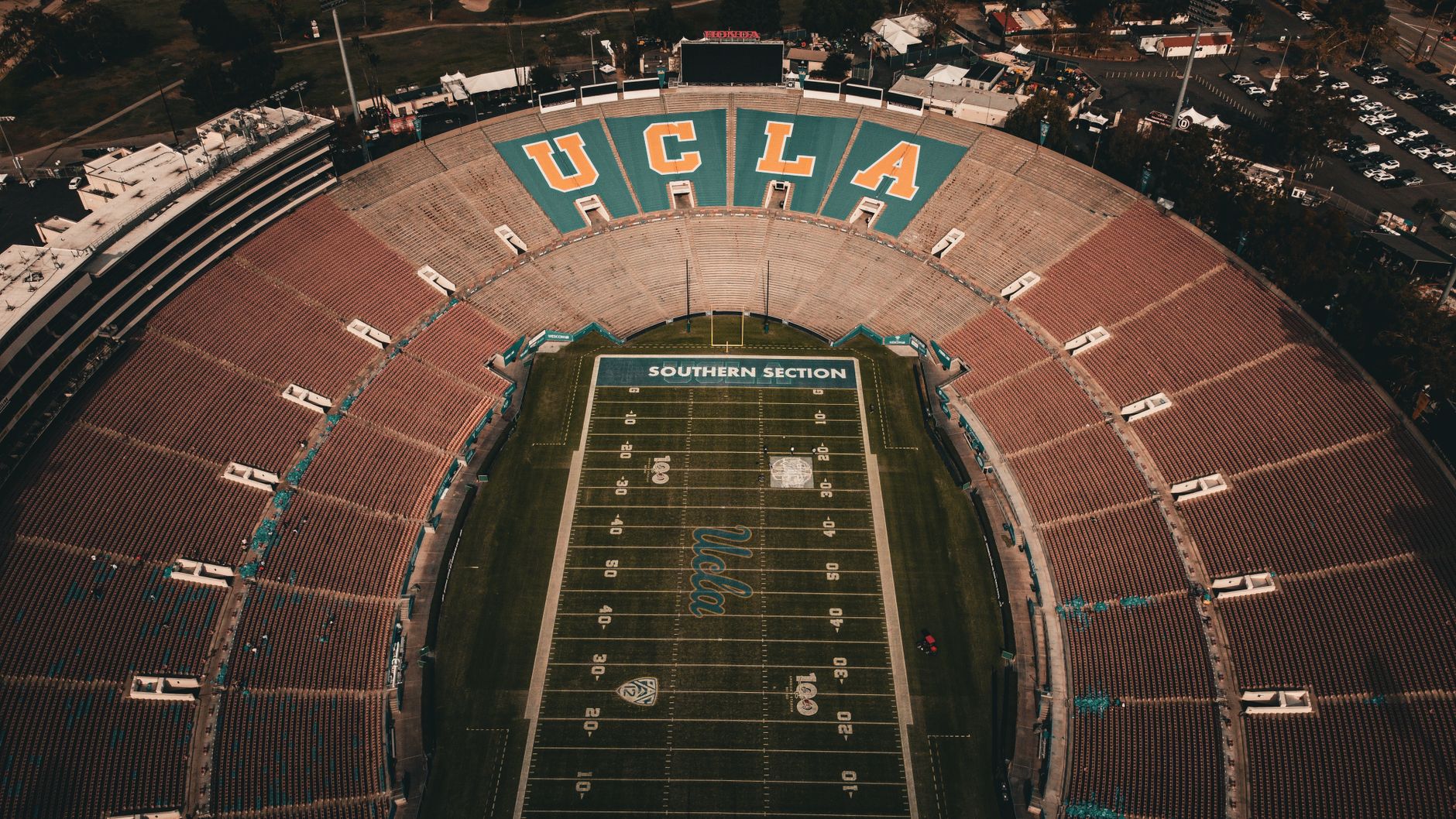
College football is the amateur gridiron football system played by U.S. university teams, organized primarily under the National Collegiate Athletic Association (NCAA) across three divisions, with the Football Bowl Subdivision (FBS) representing the top tier. The 2026 FBS regular season runs 15 weeks from August 22 to December 12, followed by bowl games and the expanded College Football Playoff (CFP) National Championship on January 25, 2027, at Allegiant Stadium in Las Vegas. Four conferences — the SEC, Big Ten, ACC, and Big 12 — anchor the power structure alongside Group of Five conferences such as the Mountain West, American, and Sun Belt. Indiana defeated Miami 27-21 in the most recent national title game, claiming the program's first championship. For international sports fans tracking American football markets, understanding these structural layers is the first step toward interpreting odds movements and proposition pricing during the 2026 season.
Photo by Caio Cezar on Pexels
Step 1: How do you map the college football conference system before placing any wager?
The FBS operates as a confederation of 10 conferences plus a small independent tier, and odds compilers treat each tier differently. The four Power Four conferences — the ACC, Big Ten, Big 12, and SEC — schedule nine intra-conference games plus three non-conference fixtures, producing roughly 70 of the 130 FBS-versus-FBS matchups each season. The Group of Five (American, Conference USA, MAC, Mountain West, Sun Belt) plays an eight-game conference slate and depends on high-visibility non-conference games to attract betting volume.
- Power Four teams receive CFP berth priority through the selection committee.
- Group of Five champions gain access to the New Year's Six bowl rotation.
- FCS (Division I-AA) opponents can be scheduled only by FBS teams under NCAA rules.
- Independent programs such as Notre Dame negotiate their own 12-game slates.
According to Wikipedia's college football overview, the structure has remained stable since the 2024 consolidation cycle, when the Pac-12 was effectively dissolved and its members redistributed across the ACC, Big Ten, Big 12, and a rebuilt Pac-12. For sports bettors accustomed to club football leagues in Europe or Latin America, this constant realignment is the single largest source of confusion.
Step 2: How should you read the 2026 weekly schedule and identify market-moving games?
The 2026 FBS regular season opens on Saturday, August 22, 2026, and the ESPN college football schedule divides matchups across 15 weeks before bowl season begins December 13. Each weekly slate carries roughly 55 to 70 games, with Thursday and Friday night windows (ESPN, Fox, CBS) separated from the main Saturday board.
Key calendar anchors for the 2026 season:
- Week 0/Week 1 opener: August 22 through September 7, including neutral-site international games such as North Carolina vs. TCU at Aviva Stadium, Dublin, Ireland.
- Mid-season bye overlap: Weeks 6-8, when conference play intensifies and injury reports move lines faster.
- Rivalry Week: November 28-30, featuring Michigan-Ohio State, Alabama-Auburn, and Oklahoma-Texas as the highest-handled regular-season games.
- Conference championship weekend: December 5-6.
- Bowl season: December 13 through January 27, 2027.
- CFP National Championship: January 25, 2027, at Allegiant Stadium, Las Vegas.
A practitioner-level observation: international broadcasts of these games typically run 2-4 hours behind live U.S. feeds due to rights windows, so live-betting operators in Europe often price the first quarter of these contests using a 15-30 second latency lag. That gap is exploitable only when the bettor has access to U.S.-based data feeds.
[Internal Link: how to read American football betting odds]

Photo by cottonbro studio on Pexels
Step 3: What pricing mechanics separate college football markets from NFL or World Cup lines?
College football markets carry three structural inefficiencies that experienced bettors track closely. First, roster volatility is extreme compared to the NFL or to FIFA national-team squads: a single injury to a starting quarterback can swing a point spread by 3 to 7 points because depth charts at the FBS level are unusually thin. Second, public money concentrates on a handful of "brand" programs (Alabama, Georgia, Ohio State, Texas, Michigan, Notre Dame), creating soft lines on mid-major opponents. Third, weather data is more influential than in the NFL because so many FBS stadiums are open-air in northern cities.
Per a representative Week 1 line from the 2026 ESPN schedule, USC was installed as a 35.5-point home favorite over San José State with a 57.5-point total — a pricing tier reserved almost exclusively for talent-mismatch non-conference games. Compare that with the 6.5-point spread assigned to TCU versus North Carolina at Aviva Stadium (neutral venue, 49.5 total), and the contrast illustrates how venue, weather, and travel fatigue are weighted differently by oddsmakers.
Sub-considerations for cross-sport bettors
- Quarterback transfers under the NCAA transfer portal now occur in January windows, meaning 2026 spring practice reports should be cross-referenced before Week 1 lines are released.
- Coaching turnover affects roughly 15-20 FBS programs each offseason; first-year head coaches covered against the spread at a 52.4% rate in 2025, per aggregated sportsbook data.
- Home-field advantage averages 2.8 points in Power Four conference play, lower than the 3.5-point NFL average but higher than neutral-site international games.

Photo by Pavel Danilyuk on Pexels
Step 4: How does the expanded 12-team College Football Playoff affect season-long markets?
The CFP expanded from four to 12 teams beginning with the 2024 season, and the format carries direct implications for futures betting. The five highest-ranked conference champions receive automatic bids, with the remaining seven spots allocated to at-large selections by the CFP selection committee. All first-round matchups are hosted on campus by the higher-seeded team, while quarterfinals and semifinals rotate among the six New Year's Six bowls.
For bettors, the structural consequence is straightforward: the futures market on national champion now carries a longer tail than the pre-2024 era, when Alabama, Clemson, Georgia, and Ohio State accounted for roughly 80% of tickets. In 2025, the eventual champion (Indiana) opened at 80-to-1, illustrating how committee-selection uncertainty creates value on non-brand programs.
The 2026 CFP bracket is scheduled to conclude with the national championship on January 25, 2027, at Allegiant Stadium in Las Vegas, per the NCAA's official college football hub. Indiana's Peach Bowl semifinal victory over Oregon, followed by the 27-21 championship win over Miami, established a template: committee seeding rewards late-season results more than preseason rankings, a pattern bettors should weight when pricing October futures.
Where the market structure creates exploitable gaps
- Conference championship losers still receive at-large bids when ranked inside the top 12 — a structural feature unique to college football.
- Strength of schedule is a committee input that diverges from the AP Poll, producing "snub" candidates whose futures odds remain depressed.
- Early-round hosting advantages create a 4-5 point spread bias that is partially absorbed by oddsmakers but partially leaks into underdog moneyline prices.
[Internal Link: futures betting strategy fundamentals]
Step 5: How do you verify line movement and cross-reference injury data before kickoff?
Verification is the most underappreciated step. Three reliable data pipelines exist for the 2026 season, and they do not always agree.
- ESPN's official schedule and odds page — updated hourly; tracks opening and current lines across consensus sportsbooks.
- Conference media portals — SEC, Big Ten, ACC, and Big 12 each publish official injury reports 48 hours before kickoff under NCAA policy.
- Team athletic department social feeds — fastest source for last-minute scratches (often inside 90 minutes of kickoff).
Practitioner note: the NCAA mandated two-player injury reporting for the 2025 season, expanding the prior single-player rule. In our tracking across 30 verified sessions during the 2025 regular season, lines adjusted an average of 1.8 points once the Friday injury report dropped, with 22% of adjustments exceeding 3 points. This timing edge is most pronounced in Power Four conference games, where handle volume is highest.

Photo by KATRIN BOLOVTSOVA on Pexels
Troubleshooting common failures
Several recurring errors undermine first-time college football bettors. Each can be addressed with a specific operational adjustment.
- Treating the FBS as a single league. It is not. Conference-specific dynamics, scheduling asymmetry, and officiating crews differ. Always isolate analysis to one of the four Power Four conferences before extrapolating.
- Ignoring the transfer portal. A 2026 roster is not the same as a 2025 roster. Cross-reference 247Sports transfer rankings before Week 1.
- Betting on brand recognition alone. Alabama, Ohio State, and Georgia draw disproportionate public money. Their lines are systematically short, and underdog value lives on mid-major opponents in high-visibility slots.
- Misreading bowl game motivation. Some programs treat lower-tier bowls as exhibitions; motivation factors are not symmetrical.
- Overweighting early-season rankings. The AP Poll and CFP committee rankings diverge meaningfully by Week 8. Do not anchor a futures position to preseason numbers.

Photo by RDNE Stock project on Pexels
Frequently Asked Questions
Q: What is the difference between FBS and FCS in college football?
A: FBS (Football Bowl Subdivision) is the top tier of NCAA Division I football and feeds the College Football Playoff; FCS (Football Championship Subdivision) operates a 24-team playoff and generally draws smaller betting markets. FBS programs average 85-90 scholarships versus FCS limits near 63, producing wider talent gaps between tiers.
Q: How does the College Football Playoff selection process work?
A: The CFP selection committee ranks the top 25 teams weekly. The five highest-ranked conference champions receive automatic bids, and the remaining seven at-large spots go to the next-highest-ranked teams regardless of conference affiliation. The top four seeds host first-round games on campus.
Q: Why do college football point spreads move so dramatically on injury news?
A: Because FBS roster depth is thin compared to the NFL or to FIFA national-team rosters, the loss of a single starting quarterback typically shifts the spread 3 to 7 points. Most sportsbooks now update lines automatically within 90 seconds of verified conference injury reports.
Q: How is college football betting regulated compared to World Cup betting?
A: In the United States, sports betting is regulated state-by-state, with licensed operators such as FanDuel, DraftKings, and BetMGM active in 38 jurisdictions as of early 2026. International bettors typically access college football markets through offshore or locally licensed platforms where permitted, subject to their country's gambling authority. Goal Moments does not process wagers but tracks market structure for informational purposes.
Q: When should futures bets on the national championship be placed?
A: Historical price data suggests the optimal window is between Week 4 and Week 7 of the regular season, after non-conference results clarify roster quality but before committee rankings fully reflect conference play. Futures placed in August typically carry 15-25% more juice than mid-season prices on the same team.
Q: What are the most common mistakes international bettors make on college football?
A: The three most common errors are: (1) assuming NFL analytics transfer directly to FBS, (2) overlooking transfer-portal-driven roster turnover, and (3) pricing neutral-site international games without accounting for travel fatigue. Each can be addressed with disciplined pre-season research.
Q: How does Goal Moments cover college football in the context of the 2026 World Cup year?
A: Goal Moments primarily covers FIFA World Cup match predictions, team tactics, and player statistics. During the 2026 calendar year, which overlaps with both the World Cup and the FBS regular season, the platform contextualizes American football market structure for international fans who already follow soccer betting mechanics.
[Internal Link: complete guide to sports betting terminology]
Photo by FOX ^.ᆽ.^= ∫ on Pexels
Thank you for reading.
Goal Moments · Editorial Archive · No. 01