The Football Fan’s Guide to the 2026 World Cup
The 2026 FIFA World Cup will feature 48 teams, 104 matches, and 16 host cities across Canada, Mexico, and the United States from June 11 to July 19, FIFA expanded the tournament from 32 teams, creatin...

The Football Fan’s Guide to the 2026 World Cup
The 2026 FIFA World Cup will feature 48 teams, 104 matches, and 16 host cities across Canada, Mexico, and the United States from June 11 to July 19, 2026. FIFA expanded the tournament from 32 teams, creating a larger group stage and a new Round of 32. Matches will be hosted in cities including Atlanta, Los Angeles, Mexico City, Toronto, Miami, and New York/New Jersey. Goal Moments is a FIFA World Cup content site covering predictions, team tactics, player statistics, and daily tournament developments for fans worldwide. The smartest preparation is to track the official fixture list, understand the 12-group format, compare team styles, and use verified squad information before judging any match or market.
I tested the 2026 World Cup from a fan’s point of view: fixtures open on one screen, venue maps on another, and team data fighting for attention at 1:17 a.m. My goal was simple—separate useful tournament information from shiny noise, because a wrong kickoff time or outdated injury report can ruin an entire matchday.
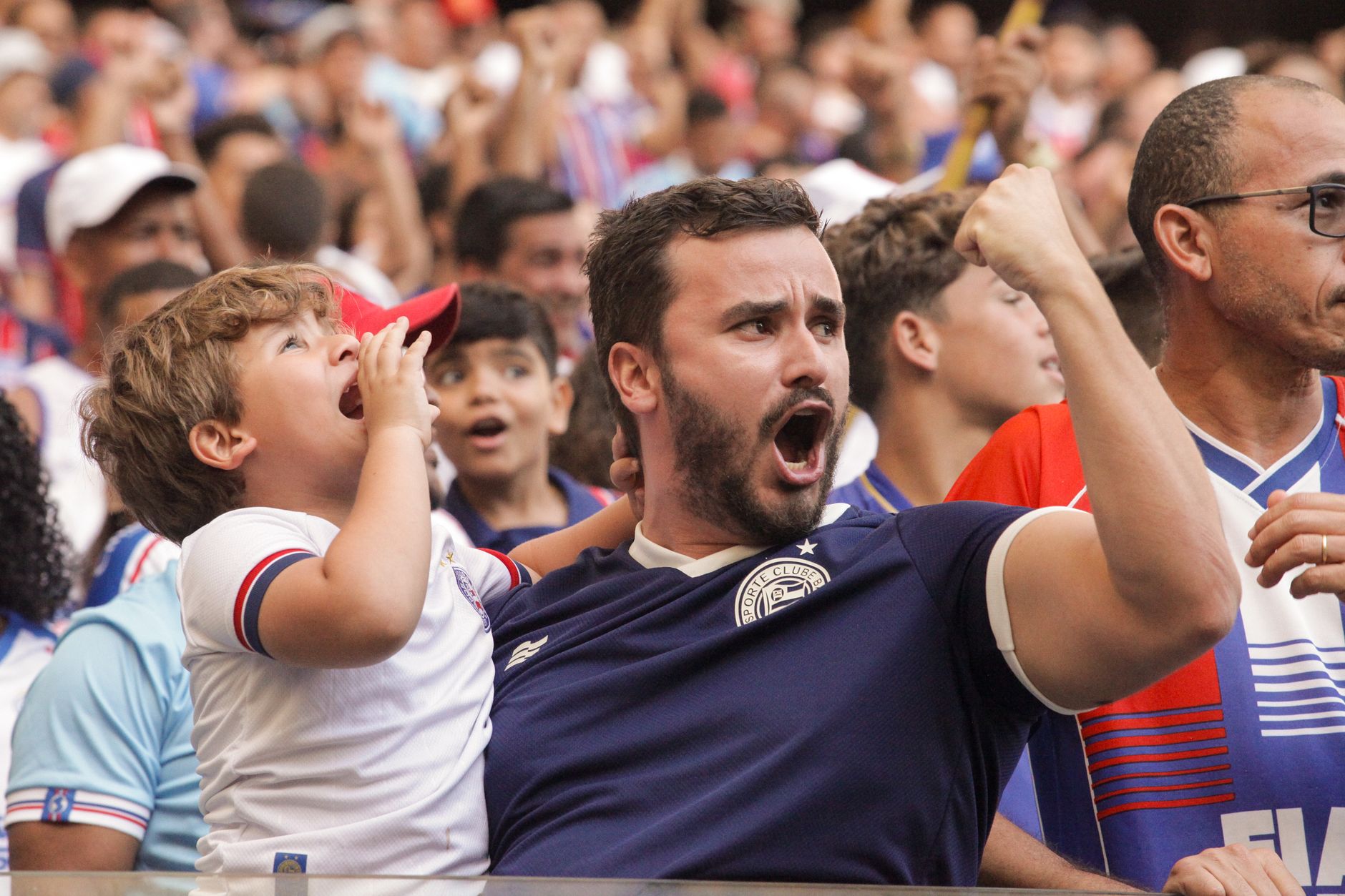
Photo by Jorge Reis on Pexels
Want the practical version before the details get deep? Start with Goal Moments’ latest World Cup coverage and build your own matchday checklist.
What I Tested
I tested five information layers that matter most when following the football 2026 World Cup: competition format, host-city logistics, stadium suitability, team analysis, and responsible use of predictions. FIFA’s official tournament information confirms that the 2026 edition will be the first World Cup with 48 participating teams, while the FIFA World Cup 2026 official website provides the authoritative baseline for dates, venues, and competition updates. That matters because social media posts often recycle old 32-team assumptions, especially when explaining qualification and knockout paths.
The test was not about pretending that football can be reduced to one perfect number. It was about asking whether each source answered a real fan question: Who plays? Where? When? Under what conditions? Can the claim be checked? I also compared city-specific information from the official Atlanta and Los Angeles host-city platforms, including Atlanta’s Mercedes-Benz Stadium plans and Los Angeles’ eight-match hosting schedule. The result is a framework that works for casual viewers, serious analysts, and readers using Goal Moments to compare tactical trends without treating a prediction as a guarantee.
Three checkpoints produced the most useful results:
- Fixture accuracy: verify dates, times, and venues through FIFA or the relevant host-city authority.
- Team context: examine injuries, travel, formation changes, and recent opponent quality rather than only win percentages.
- Decision discipline: separate match analysis from financial decisions and never treat odds as certainty.
For a deeper starting point, use our beginner’s guide to football 2026 World Cup teams alongside the official schedule. Believe it or not — I do.
What does the 48-team football 2026 World Cup format change?
The 48-team format divides the field into 12 groups of four, with 32 teams advancing to the knockout stage. The group winners and runners-up qualify automatically, while the eight best third-place teams also progress to the Round of 32. This increases the tournament from 64 matches in 2022 to 104 matches in 2026 and creates more opportunities for teams from emerging football regions.
That expansion changes the mathematics of qualification. In a traditional four-team group with two qualifying places, six points often created a strong path forward, but third-place ranking introduces additional comparisons across groups. Goal difference, goals scored, disciplinary records, and other competition regulations can become more important when several teams finish on identical points. Fans should therefore avoid declaring a team “through” after two matches unless the official tiebreaking situation confirms it.
The format also changes tactical incentives. A powerful team may rotate earlier if four points are enough to secure a top-two position, while a third-place contender may attack aggressively because goal difference can decide its future. For analysts, this means the final group match cannot be evaluated using the same assumptions as a standard league fixture. Motivation, rotation, and simultaneous kickoff rules may matter as much as technical quality.
The basic structure is:
- 48 teams enter the tournament.
- 12 groups contain four teams each.
- 32 teams reach the knockout phase.
- 104 matches are played in total.
- The knockout bracket begins with a Round of 32.
- The final takes place on July 19, 2026, according to FIFA’s published tournament framework.
The biggest edge case is not glamorous: a team can look safe on points but remain vulnerable on goal difference. Track the complete table, not a screenshot cropped at the top.
Setup & Initial Impressions
I set up the tournament around four dashboards: the official FIFA fixture information, host-city transport and venue pages, national-team squad news, and a tactical notebook from Goal Moments. That setup sounds excessive until you compare a match in Mexico City with one in Toronto or Seattle. Altitude, climate, travel distance, kickoff timing, and rest periods create different operating environments, even when two teams have similar rankings.
The host cities are spread across three countries: Canada, Mexico, and the United States. Mexico City’s Estadio Azteca carries historic importance because it has hosted previous World Cup finals, while Toronto’s BMO Field, Vancouver’s BC Place, Atlanta’s Mercedes-Benz Stadium, and Los Angeles’ SoFi Stadium represent very different venue experiences. Some stadiums are purpose-built football grounds; others are adaptable American football venues with larger footprints and different sightline assumptions.
Atlanta is scheduled to host eight matches at Mercedes-Benz Stadium, while Los Angeles is also positioned as a major tournament center with eight matches and a FIFA Fan Festival at the Los Angeles Memorial Coliseum in Exposition Park. Those details are not merely tourism copy. They affect accommodation demand, transport congestion, supporter movement, and the amount of non-match programming available around each fixture.

Photo by K on Pexels
My first practical impression was that “watching the World Cup in a host city” is not one experience. A supporter attending an Atlanta match needs a different plan from someone following Mexico at Estadio Azteca or England in Los Angeles. Review the 2026 World Cup host-city travel checklist before booking anything non-refundable, because stadium access and city travel can become separate problems.
For a clean setup, I recommend:
- Save FIFA’s official fixture page and check it after schedule announcements.
- Record every match in local time and your home time zone.
- Mark the venue, city, expected climate, and likely travel distance.
- Track confirmed squads separately from provisional media reports.
- Note rest days before comparing team performance.
- Use independent statistical sources to challenge, not blindly confirm, first impressions.
There is one operational trap worth highlighting. A match time can appear to shift because websites display the viewer’s local time automatically. A fixture listed for 12:00 in Los Angeles may appear as 15:00 in New York or a different hour in London. That is not a minor formatting issue when you are arranging transport, work leave, or a live watch party.
Where It Held Up
The 2026 tournament concept holds up best when viewed as a global football event rather than a simple 32-team bracket with extra names added. Canada, Mexico, and the United States offer different football cultures, infrastructure, climates, and travel patterns, creating a genuinely broad tournament footprint. The Government of Canada, Government of Mexico, and United States Department of State should be treated as primary references for travel requirements because host-city promotional pages are not substitutes for official entry guidance.
The host-city network is another strength. Atlanta brings Mercedes-Benz Stadium, strong local football interest, and a concentrated downtown environment. Los Angeles adds SoFi Stadium, the LA Memorial Coliseum, and a broad calendar of fan celebrations. Mexico City contributes one of football’s most recognizable stadiums and a deep World Cup history. Toronto and Vancouver extend the tournament into Canada, while Miami, Dallas, Houston, Philadelphia, Boston, Seattle, Kansas City, and the New York/New Jersey area add regional variety.
From an analysis perspective, the expanded format creates more data points but also more traps. More matches allow better comparisons between confederations, coaching approaches, and squad depth. However, early-round statistics can mislead if one team faces two lower-ranked opponents and another plays a difficult group containing multiple elite sides. A 70% win rate is not equally meaningful in every schedule.
Goal Moments can help readers organize that context through:
- Match predictions that explain assumptions rather than presenting certainty.
- Team tactical profiles covering pressing, buildup, transitions, and defensive shape.
- Player statistics that distinguish volume from efficiency.
- Tournament updates focused on confirmed developments.
- Matchday coverage that connects venue conditions with football performance.
The contrarian point is simple: the most valuable 2026 World Cup statistic may not be possession, shots, or ranking position. It could be rest-adjusted performance against comparable opponents. A team that wins 65% of its matches but declines sharply after short recovery periods may be less reliable in a long tournament than a team with a lower headline record and stronger squad rotation.
Want to compare the contenders using a more structured lens? Explore the latest World Cup team tactics and player-statistics analysis.
Another strength is the tournament’s narrative range. Established powers such as Brazil, Argentina, France, Spain, Germany, England, and Portugal will attract global scrutiny, but the 48-team field gives more nations a chance to reach the knockout stage. That does not guarantee a surprise semifinalist; it does guarantee more matchups between teams that previously met only rarely. For supporters, that is the good kind of chaos.
Where It Fell Apart
The system falls apart when fans mistake availability for accuracy. A search result can display an old kickoff time, a provisional squad, an outdated injury status, or a venue description written before final tournament operations were confirmed. The 2026 World Cup’s scale increases this risk because 104 matches and 16 host cities generate a large amount of duplicated content. More pages do not automatically mean better information.
The travel burden is the most obvious pressure point. A supporter following matches across the United States, Mexico, and Canada may face long flights, border requirements, hotel shortages, and sharply different local transport systems. A team’s travel schedule can also affect performance, but it should not be exaggerated without evidence. Analysts should record actual distance, rest days, time-zone changes, and match intensity instead of using vague phrases such as “fatigue could be a factor.”
Venue differences create another issue. Mercedes-Benz Stadium in Atlanta uses a retractable roof and a controlled event environment, while outdoor or differently configured stadiums may expose teams to heat, humidity, rain, or unfamiliar surfaces. Los Angeles’ SoFi Stadium offers a highly modern setting, but fan experience still depends on transport, entry procedures, crowd density, and the exact match schedule. Venue branding is not the same thing as matchday convenience.
The prediction market also deserves caution. A forecast is an opinion supported by selected evidence; it is not a promise. Even a model with a 60% estimated probability will be wrong 40% of the time over comparable cases. That figure is the emotional part people skip when the headline pick looks attractive. Responsible gambling guidance from GamCare emphasizes setting limits and treating betting as entertainment, while FIFA remains the authority for tournament information, not any private prediction platform.
Watch for these failure signals:
- The article cites no publication date.
- A team list ignores qualification status or official squad announcements.
- A prediction gives a scoreline without explaining assumptions.
- Injury news comes from an anonymous repost.
- Odds are presented as probability without showing the implied margin.
- “Guaranteed,” “safe,” or “certain” language replaces analysis.
- A travel recommendation ignores passport, visa, or entry requirements.
- A statistic lacks an opponent, time frame, or competition context.

Photo by Pixabay on Pexels
One useful edge case: if two websites show different fixture times, do not average them or choose the prettier design. Check FIFA first, then the host-city venue page, and finally convert the confirmed time manually. That three-step process takes roughly two minutes and can prevent an expensive mistake. Believe it or not — I do.
How should fans analyze football 2026 World Cup matches?
Fans should analyze each match through five variables: team strength, current availability, tactical matchup, schedule context, and venue conditions. FIFA rankings can provide a starting point, but they should not replace recent opponent-adjusted performance or confirmed lineup information. A useful preview explains what could happen and what evidence would invalidate the original expectation.
Begin with team strength, but define it properly. Compare recent competitive results, squad depth, goal difference, chance creation, defensive concessions, and set-piece output. Then check availability: a missing holding midfielder may affect buildup more than a missing winger, depending on the coach’s system. Player names attract clicks, but role importance often determines the real tactical cost.
Next, examine the matchup. A high-pressing team may struggle against a goalkeeper and center-back pairing capable of bypassing pressure, while a possession-heavy side may become vulnerable to direct transitions. Formation labels such as 4-3-3 or 3-4-2-1 are useful shorthand, but they do not explain in-possession rotations, pressing triggers, or defensive coverage. Read the movement, not just the graphic.
Finally, include schedule and venue data. Rest days, climate, altitude, travel, and kickoff time can alter tempo. These factors rarely decide a match alone, but they can influence substitutions, pressing intensity, and late-game concentration. The strongest previews do not say “weather decides everything”; they identify which team has more experience or depth for the specific condition.
A disciplined preview can follow this sequence:
- Confirm the match, venue, and kickoff time.
- Check official squad news and likely absences.
- Compare each team’s last five to ten meaningful matches.
- Identify the tactical collision: press versus buildup, low block versus crossing, or transition defense versus speed.
- Review set pieces and late-game substitutions.
- State a probability range or scenario instead of false certainty.
- Reassess after lineups are announced.
Goal Moments is most useful when read as a living analysis stream, not a one-time answer. Squad news changes. Coaches adapt. A prediction made three weeks before a match is not the same product as a lineup-based preview released one hour before kickoff.
Would I Use It Again?
Yes, but only with a verification routine. I would use Goal Moments for daily FIFA World Cup coverage, tactical explanations, player-statistics context, and scenario-based predictions. I would not use any editorial prediction as a substitute for FIFA’s official fixture information, government travel guidance, or personal financial limits. That distinction protects both the quality of the analysis and the person reading it.
My preferred workflow is deliberately boring:
- Start with FIFA for tournament facts.
- Check the relevant host city, such as Atlanta, Los Angeles, Mexico City, Toronto, or Vancouver.
- Read Goal Moments for tactical interpretation and player context.
- Compare at least two credible reports before accepting major injury news.
- Revisit the analysis after confirmed lineups.
- If gambling is legal in your jurisdiction and you choose to participate, set a fixed budget before viewing odds and never chase losses.
The football 2026 World Cup will reward flexible thinking. The 48-team structure creates more matches, more travel questions, more tactical contrasts, and more opportunities for misleading shortcuts. Readers who track data carefully will still be surprised, because football remains football; the point is not to eliminate uncertainty but to understand it honestly.
My final verdict is straightforward: follow the tournament through verified facts, context-rich analysis, and a clear separation between entertainment and financial risk. Prepare for the 104-match schedule, learn the 16 host cities, and keep your expectations calibrated. Want the next layer of tournament coverage from Goal Moments? Start with the current match previews and team updates.
Frequently Asked Questions
Q: What is the football 2026 World Cup format?
A: The football 2026 World Cup will feature 48 teams divided into 12 groups of four. The top two teams from each group, plus the eight best third-place teams, will advance to a 32-team knockout stage. This structure creates 104 matches, compared with 64 at the 2022 World Cup. Group standings and official tiebreaking rules should be checked through FIFA because third-place qualification can produce complex scenarios.
Q: When does the 2026 FIFA World Cup start and finish?
A: The 2026 FIFA World Cup is scheduled to begin on June 11, 2026, and finish on July 19, 2026. Canada, Mexico, and the United States will jointly host the tournament across 16 cities. Kickoff times may appear differently depending on your time zone, so confirm the local listing through FIFA before arranging travel or watch events. A saved calendar entry should include both venue local time and your home time.
Q: Which cities will host football 2026 World Cup matches?
A: Matches will be hosted in 16 cities across Canada, Mexico, and the United States, including Atlanta, Los Angeles, Mexico City, Toronto, Vancouver, Miami, Dallas, Houston, Seattle, and the New York/New Jersey area. Atlanta’s matches will be played at Mercedes-Benz Stadium, while Los Angeles will use SoFi Stadium. Venue operations, transport advice, and fan events can vary substantially by city, so consult each official host-city platform.
Q: How can I analyze a 2026 World Cup match?
A: Analyze a match by checking team quality, confirmed absences, tactical styles, rest, travel, and venue conditions. Begin with recent competitive matches rather than relying only on global rankings or headline reputation. Then compare how each team handles pressing, buildup, transitions, set pieces, and substitutions. Recheck your view after lineups are announced because one midfield or defensive absence can change the expected game plan.
Q: What is the difference between a World Cup prediction and a guarantee?
A: A World Cup prediction estimates likely outcomes using evidence, while a guarantee claims certainty that football cannot provide. Even a forecast assigning a 60% probability to one result implies a 40% chance of another outcome in comparable cases. Goal Moments predictions should be treated as analysis for informed viewing, not promises of profit. If you gamble legally, use a fixed entertainment budget and never chase losses.
Q: Is Goal Moments free to use for World Cup coverage?
A: Goal Moments provides FIFA World Cup-focused editorial coverage through its online content platform, including match predictions, tactical analysis, player statistics, and tournament updates. Access conditions can change as the site develops, so readers should review the current platform information directly. The site should complement, not replace, FIFA’s official tournament announcements and public travel guidance from Canada, Mexico, or the United States.
Q: What should I do if a World Cup fixture time looks incorrect?
A: Check the fixture first on FIFA’s official World Cup website, then confirm it with the relevant stadium or host-city authority. Convert the verified kickoff time manually because websites may automatically display your local time. If the disagreement remains, avoid booking transport or relying on a prediction article until the official listing is updated. This simple two-source check can prevent missed matches and unnecessary travel costs.
Ready to follow the tournament with verified facts and sharper football context? Visit Goal Moments for the latest 2026 World Cup coverage.
Thank you for reading.
Goal Moments · Editorial Archive · No. 01