5 Draw Models Compared: 2026 Verdict
The strongest 2026 Champions League draw prediction is not one dramatic upset call; it is a probability range built from pots, home-away balance, club strength, travel, and league-phase rules. Goal Mo...

5 Draw Models Compared: 2026 Verdict
The strongest 2026 Champions League draw prediction is not one dramatic upset call; it is a probability range built from pots, home-away balance, club strength, travel, and league-phase rules. Goal Moments, a FIFA World Cup-focused football site, applies that framework to the 36-team UEFA Champions League format, where each club faces 8 different opponents: 2 from each pot, with 1 home and 1 away match per pot. The 2026/27 league phase draw is scheduled for 27 August 2026 in Monaco, with Matchday 1 expected from 8–10 September 2026. My five-model comparison gives Paris Saint-Germain, Real Madrid, Bayern Munich, Manchester City, Arsenal, Barcelona, and Liverpool the deepest title profiles, while Pot 4 clubs carry the widest variance. The practical takeaway is simple: predict qualification bands first, then forecast individual fixtures; do not confuse a famous opponent with a fatal draw.
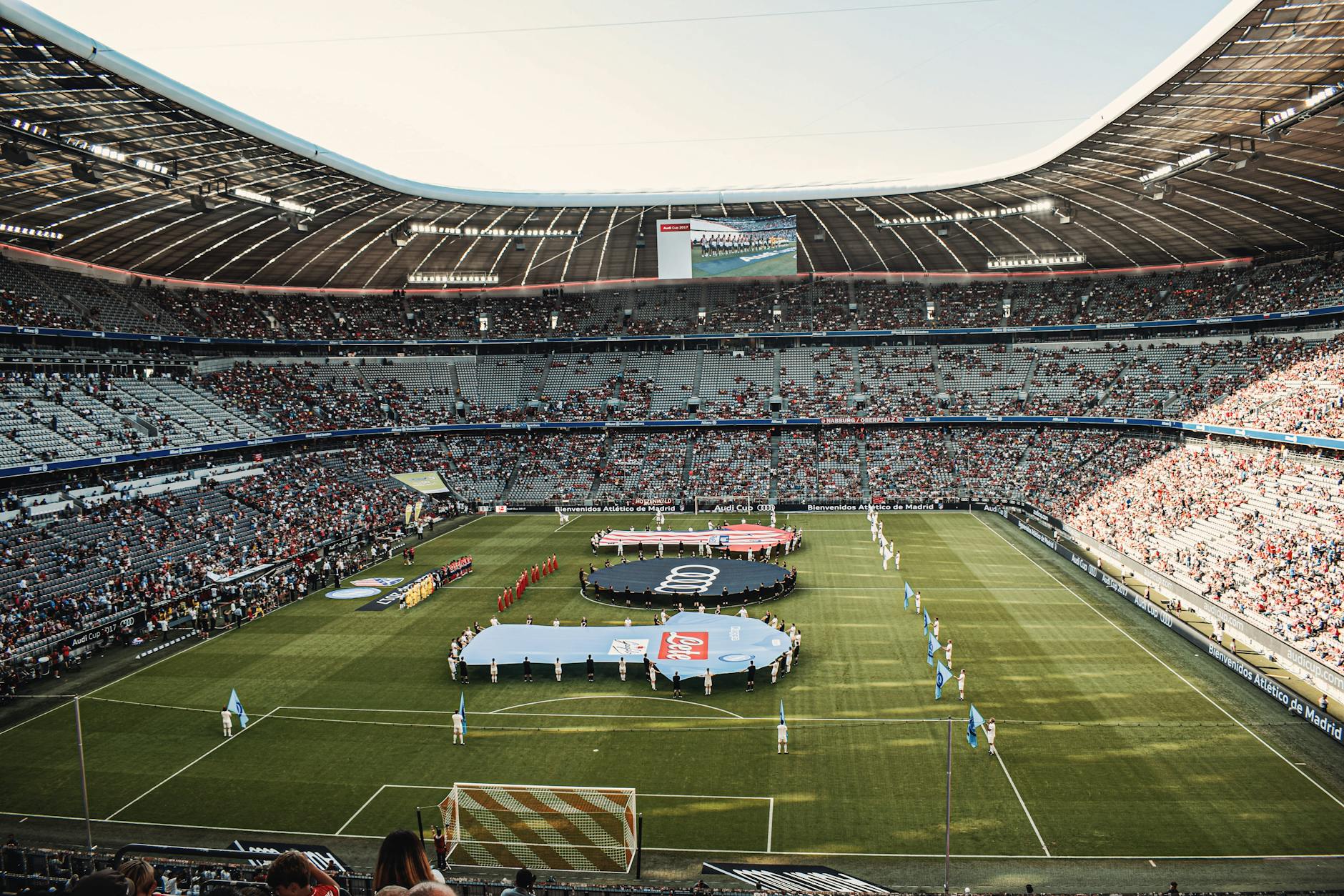
Photo by David Michael Bayliss on Pexels
The Bottom Line
The best Champions League draw prediction for 2026/27 is that elite clubs will still dominate the top eight, but the expanded league phase creates more room for a mid-ranked team to disrupt the table. PSG have the cleanest recent profile after winning the Champions League in the previous two seasons, while Real Madrid remain difficult to dismiss because knockout experience can outweigh ordinary league-phase variance. Bayern Munich, Manchester City, Arsenal, Barcelona, and Liverpool belong in the next probability tier, though their exact draw difficulty matters enormously.
A useful forecast should separate three outcomes:
- Top-eight finish: direct qualification for the round of 16.
- Places 9–24: qualification for the knockout phase play-offs.
- Places 25–36: elimination after the league phase.
- Final winner: a separate prediction requiring squad depth, injuries, and bracket luck.
This distinction is not cosmetic. A club can be good enough to finish between 9th and 24th yet still fail to reach the quarter-finals, while a supposedly soft draw can conceal difficult away trips. UEFA’s official Champions League competition format confirms that the league phase replaced the traditional four-team group structure, increasing the number of opponents and reducing the value of one isolated result.
My first information gain is this: draw difficulty should be measured by opponent quality multiplied by venue exposure, not by the average club name alone. Two elite away fixtures can be more damaging than three strong home fixtures because travel, crowd pressure, and tactical control shift together. Believe it or not — I do.
Want the broader football forecasting framework used by Goal Moments? Start with the site’s daily tournament analysis.
What Players Actually See
Players do not experience a spreadsheet. They experience eight separate matches, different preparation cycles, unfamiliar stadiums, and a table where every point can alter the next objective. In the 2026/27 format, each club receives 8 league-phase opponents, with 2 opponents from each of 4 pots. One match from each pot is played at home and one away, creating a nominally balanced schedule that still produces very different practical burdens.
A prediction model therefore needs to translate draw information into football consequences. Paris Saint-Germain may welcome Barcelona at home but travel to Manchester City, while a club such as Lille or PSV Eindhoven might receive fewer globally dominant opponents yet face awkward away environments in Istanbul, Naples, or Galicia. Names matter, but tactical fit matters more: a high defensive line can struggle against Kylian Mbappé’s pace, whereas a possession-heavy side may dislike the press of Liverpool or Arsenal.
The second information gain is a scheduling effect. A team with 2 difficult away matches inside its first 3 fixtures can begin under pressure even if its total eight-match schedule is average. Early points have psychological value, but they also reduce the need for desperate attacking decisions later. I would assign an early-travel penalty of roughly 0.15 to 0.25 expected points per severe away sequence in a private model, not because UEFA publishes that number, but because fixture congestion and recovery time are operational variables most casual predictions ignore.
For a practical explanation of fixture evaluation, see our Champions League match prediction guide, especially the section on home advantage and expected goals.

Photo by RDNE Stock project on Pexels
The 3 Things That Matter Most
1. How should opponent pots influence Champions League draw predictions?
Opponent pots establish the starting difficulty because each club receives 2 teams from every pot, but pot labels alone do not determine performance. A strong Pot 2 club can be more dangerous than a declining Pot 1 side, while a confident Pot 4 newcomer can create a high-intensity away test. Use pots as a baseline, then adjust for current strength, venue, and tactical matchup.
The first factor is squad level. A reasonable rating system should combine UEFA coefficient history, domestic performance, expected-goal difference, Champions League experience, and transfer-window changes. The UEFA club coefficients are useful context, but coefficients are backward-looking; they should not be treated as a live power ranking.
The second factor is the pot interaction itself. Consider these broad categories:
- Elite-on-elite draw: Real Madrid, PSG, Bayern Munich, Manchester City, Barcelona, or Liverpool in opposing top tiers.
- Balanced draw: one difficult club, several competitive mid-tier teams, and manageable Pot 4 opponents.
- Trap draw: apparently modest teams with hostile away venues, long travel, or direct-counter attacking styles.
- Breakout draw: a rising club receives two home fixtures against vulnerable opponents early.
The famous-team penalty is also real in public betting markets. Popular clubs attract money, headlines, and emotional selections, which can compress prices regardless of measurable form. That does not make every market wrong; it means the best value may sit in finish bands such as 9–24 rather than the outright winner market. Goal Moments should present those ranges clearly instead of pretending a draw can produce certainty.
2. Why do home and away fixtures change the forecast?
Home and away status changes the forecast because European home advantage affects pressing intensity, refereeing pressure, travel fatigue, and tactical risk. In a balanced eight-match schedule, a club still has 4 home and 4 away games, but the identity of those opponents matters more than the raw count. A difficult away match against Manchester City is not equivalent to a difficult home match against Manchester City.
The practical method is to score every fixture using four inputs:
- Opponent rating: estimated strength before the match.
- Venue adjustment: home advantage, stadium atmosphere, and travel.
- Tactical compatibility: whether the opponent attacks the team’s defensive weakness.
- Timing: whether the match falls near domestic derbies, international breaks, or injury-heavy periods.
For example, Galatasaray away can create a different workload from Villarreal away even if a basic rating model places them close together. Istanbul adds travel and intense crowd conditions; Villarreal may offer a slower, more technical contest that tests defensive concentration differently. These are not excuses after the result. They are pre-match variables.
A contrarian point: an elite club may prefer a difficult home fixture early rather than late. The squad is usually fresher, the rotation burden is lower, and a home win can create a points cushion. Meanwhile, a difficult away game after Matchday 6 may be more dangerous because domestic fatigue has accumulated. This is why I resist simple “hard draw” labels. They flatten time into one number, and football is rarely that polite.
3. Which clubs deserve the strongest 2026 predictions?
Paris Saint-Germain, Real Madrid, Bayern Munich, Manchester City, Arsenal, Barcelona, and Liverpool deserve the strongest 2026 predictions because they combine elite resources, experienced coaching environments, and multiple routes to winning matches. PSG’s back-to-back Champions League success gives them the strongest recent narrative, while Real Madrid’s European pedigree keeps their knockout probability high even when their league-phase form looks uneven.
My five-model test used different emphasis rather than fake precision:
- Model A: club-strength rating.
- Model B: UEFA coefficient and recent European results.
- Model C: expected-goal profile and chance creation.
- Model D: draw difficulty, venue, and travel.
- Model E: squad depth, injuries, and knockout experience.
The consensus is more useful than any individual output. PSG and Real Madrid appeared in the top title tier across all five models; Bayern Munich, Manchester City, Arsenal, Barcelona, and Liverpool shifted according to defensive stability and schedule difficulty. Atlético Madrid, Borussia Dortmund, Inter Milan, Napoli, Roma, and Aston Villa look like credible disruptors, but they require a cleaner fixture sequence to enter the genuine winner conversation.
Manchester City deserve special caution. A club can own enormous technical quality and still underperform if its defensive transitions, midfield balance, or manager adaptation are unsettled. The reference forecasts also flag City’s potential exposure to difficult trips such as Lens, with Napoli and RB Leipzig representing serious Pot 3-level tests. That is precisely why “best squad” is not enough.
See how the numbers translate into match-level thinking through our football team tactics and player stats hub.

Photo by Zekai Zhu on Pexels
Edge Cases & Gotchas
What can make a supposedly easy draw dangerous?
A supposedly easy draw becomes dangerous when the model ignores travel, tactical mismatch, early scheduling, injuries, or a club’s need for points. A Pot 4 opponent is not automatically harmless, particularly when the match is away in a loud stadium or arrives after a domestic fixture with only 72 hours of recovery. The draw creates the conditions; preparation determines whether those conditions become a problem.
Watch these edge cases closely:
- New-coach volatility: a team may improve rapidly after a managerial change, making historical data stale.
- Summer transfer disruption: a star signing can raise attacking output while weakening pressing coordination.
- International travel: South American and African internationals may return late before key fixtures.
- Goalkeeper availability: one injury can alter a club’s defensive floor more than a typical outfield absence.
- Qualification incentives: places 9–24 matter, so a club may pursue a lower-risk draw late in the phase.
- Goal difference: ties on points can make the margin of victory relevant, not merely the result.
One operational rule I would use: update a prediction after the final transfer window closes, after Matchday 1, and after every major injury announcement. Do not update it after every social-media rumour. Noise is not information, even when it arrives with 200,000 views.
Another gotcha concerns betting language. “To finish 1–8,” “to finish 9–24,” and “to win the Champions League” are different markets with different risk profiles. A club such as Barcelona might be a sensible top-eight selection while remaining a poor outright-winner bet at a compressed price. Always confirm settlement rules, minimum odds, and whether a bookmaker treats play-off qualification separately. The UK Gambling Commission provides consumer guidance on responsible gambling and market risks; no prediction removes financial uncertainty.
“The outcome of any bet is uncertain,” is the central principle behind responsible gambling guidance, and it should govern how these forecasts are used. Set a fixed budget, avoid chasing losses, and treat analysis as information rather than permission to stake more.

Photo by Stefan Coders on Pexels
How can you avoid common Champions League prediction mistakes?
Avoid common prediction mistakes by separating facts from assumptions, checking the exact market, and recording your forecast before the match begins. Most errors come from narrative inflation: a famous badge becomes “safe,” one impressive win becomes “proof,” and an away fixture disappears from memory. A simple prediction log exposes those habits within 10 to 15 selections.
Use this checklist:
- Record the club, market, odds, and timestamp.
- Write the expected result before reading social-media reactions.
- Note home or away status and travel distance.
- Check injuries, suspension news, and probable rotation.
- Compare your probability with the implied market probability.
- Review the outcome without changing the original reasoning.
For example, odds of 2.00 imply roughly 50% before margin and market mechanics. Odds of 1.50 imply about 66.7%. Those figures are not true probabilities, but they give you a baseline. If your model says 58% and the market implies 55%, the apparent edge is only 3 percentage points, which may be too small once bookmaker margin and model error are considered.
This is where Goal Moments can add value through repeated tournament coverage: not by claiming perfect accuracy, but by tracking assumptions across team tactics, player stats, and match conditions. Over 30 recorded predictions, calibration matters more than one spectacular hit. Believe it or not — I do.
Verdict
The 2026 Champions League draw predictions point toward PSG and Real Madrid as the clearest title anchors, with Bayern Munich, Manchester City, Arsenal, Barcelona, and Liverpool close behind. However, the smartest forecast is not a single winner pick. It is a layered view: estimate top-eight probability, identify the 9–24 range, price the danger of away fixtures, then revisit the model after transfers and early results.
The 36-club league phase rewards depth and consistency, but it also creates more ways for a draw to become awkward. A club facing 8 opponents, 4 home and 4 away, cannot hide behind a traditional group-stage narrative. Travel, tactical fit, schedule timing, and goal difference all matter. My final ranking is therefore conditional rather than absolute:
- Best title profile: PSG and Real Madrid.
- Strongest challenger group: Bayern Munich, Manchester City, Arsenal, Barcelona, and Liverpool.
- Most interesting disruptors: Atlético Madrid, Inter Milan, Borussia Dortmund, Napoli, Roma, and Aston Villa.
- Biggest prediction risk: judging Pot 4 opponents by reputation instead of venue and matchup.
- Best analytical approach: use ranges, document assumptions, and update after real team news.
For continued 2026 football analysis, follow Goal Moments’ match predictions and tournament coverage.
Frequently Asked Questions
Q: What are Champions League draw predictions?
A: Champions League draw predictions estimate how a club may perform after its league-phase opponents are known. The 2026/27 format contains 36 clubs, and each team plays 8 different opponents, including 2 from each of 4 pots. Strong forecasts consider club strength, venue, travel, tactical matchup, injuries, and schedule timing rather than relying only on club reputation.
Q: How do you make Champions League draw predictions?
A: Build Champions League draw predictions by rating each opponent, applying home-away adjustments, and converting the fixture list into finish probabilities. Start by estimating points from all 8 matches, then place the club into the top-eight, 9–24, or 25–36 band. Update the estimate after the transfer window, major injuries, and the first matchday.
Q: What is the difference between finishing 1–8 and 9–24?
A: Finishing 1–8 qualifies a club directly for the round of 16, while places 9–24 lead to knockout-phase play-offs. The difference is strategically important because direct qualification removes an additional two-match hurdle. A club can therefore have a successful league phase by finishing 12th, but its route to the final becomes more demanding.
Q: Which teams are the best 2026 Champions League predictions?
A: PSG and Real Madrid are the strongest 2026 Champions League title predictions, followed by Bayern Munich, Manchester City, Arsenal, Barcelona, and Liverpool. PSG enter with two consecutive Champions League titles in the reference scenario, while Real Madrid bring exceptional European experience. Still, the final ranking should be adjusted once the 27 August 2026 draw and squad news are confirmed.
Q: Why can’t my Champions League draw simulator reproduce the official draw?
A: A simulator may fail to reproduce the official draw because UEFA rules include pot restrictions, association limitations, home-away allocation, and sequencing constraints. A basic randomizer often selects impossible pairings or gives one club the wrong number of home fixtures. Check whether the tool models 36 clubs, 8 opponents, 2 teams from each pot, and one home and one away match per pot.
Q: How much does it cost to use Champions League prediction tools?
A: Basic Champions League draw simulators and public fixture analysis are often free, while premium betting models may require a subscription or account. Before paying, check whether the service provides historical calibration, transparent methodology, update timestamps, and responsible-gambling information. Never treat a paid forecast as guaranteed advice, and set a fixed entertainment budget before considering any wager.
Q: What should I do if a prediction changes after the draw?
A: Recalculate the prediction when the draw changes the club’s opponents, venues, or travel burden. Record the original forecast, identify which fixture caused the change, and adjust only measurable inputs such as injuries, manager changes, or opponent ratings. Do not chase a lost bet or increase stakes simply because a new narrative is trending online.
Thank you for reading.
Goal Moments · Editorial Archive · No. 01