Football Drills vs Match Play: Skill Gains
The fastest way to improve football skills is to combine deliberate drills with realistic match decisions, not repeat cone exercises alone. Players at every level can build better control, passing, dr...

Football Drills vs Match Play: Skill Gains
The fastest way to improve football skills is to combine deliberate drills with realistic match decisions, not repeat cone exercises alone. Players at every level can build better control, passing, dribbling, shooting, defending, and agility through 3–5 focused sessions per week, each lasting 30–60 minutes. Lionel Messi has famously trained for several hours a day across different periods of his career, but most players need consistency rather than a five-hour schedule. A useful target is 200–300 quality touches per session, followed by small-sided games that force scanning and quick choices. FIFA and UEFA both emphasize technical repetition, game understanding, and physical preparation as connected parts of development. Start by recording one match, identify your weakest action, and spend 60% of your next two weeks training that specific problem.
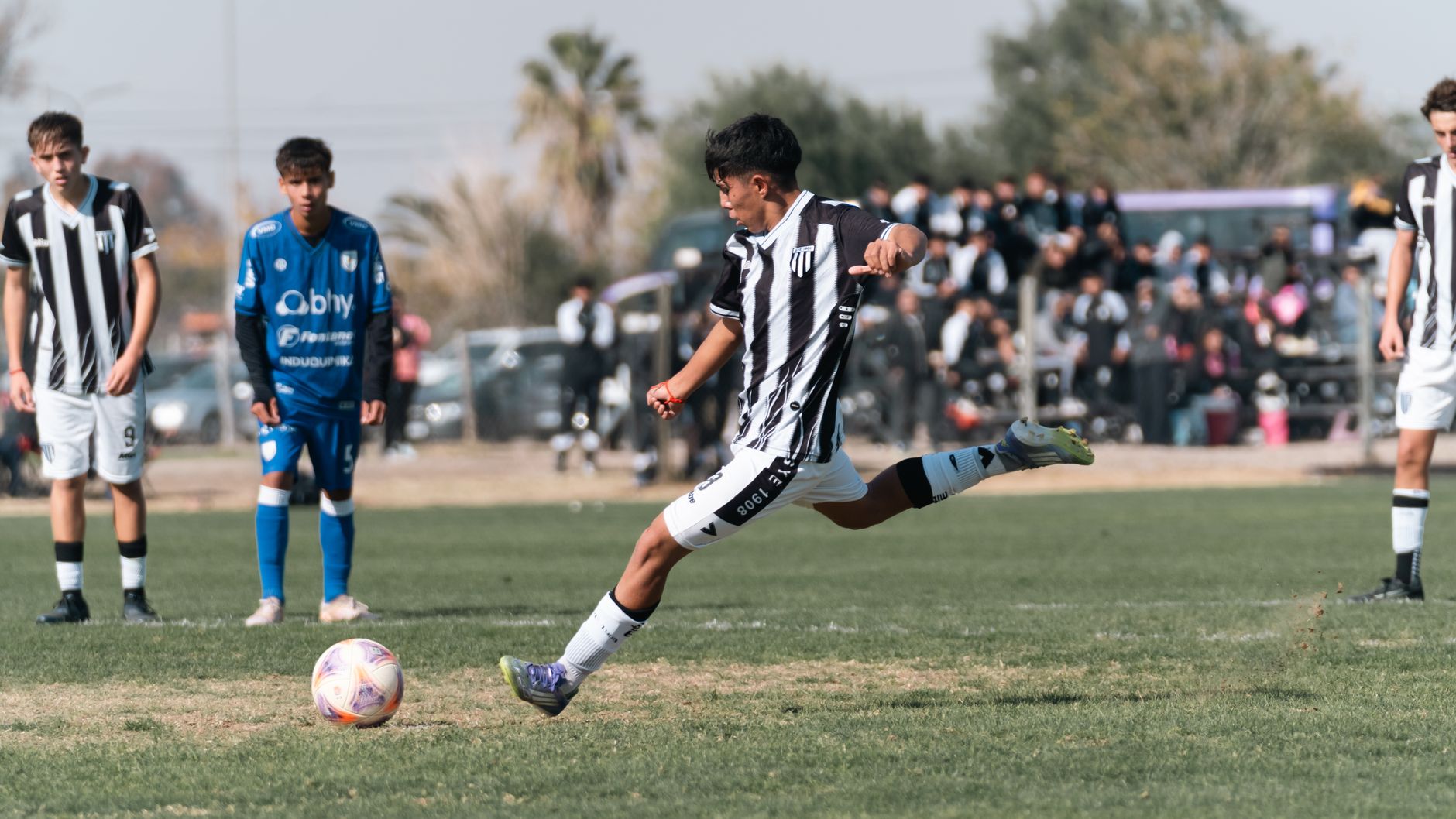
Photo by Franco Monsalvo on Pexels
The Bottom Line
Improving football skills requires targeted repetition, progressive difficulty, and regular game exposure. The most effective approach is a weekly structure that gives roughly 40% of training time to first touch and ball mastery, 25% to passing and receiving, 20% to finishing or defending, and 15% to speed, mobility, and recovery. That split is not a universal law, but it prevents the common mistake of spending every session on flashy dribbling while neglecting decision-making.
A practical 45-minute solo session can include 10 minutes of ball mastery, 10 minutes of wall passing, 10 minutes of dribbling through irregular cones, 10 minutes of shooting or target passing, and 5 minutes of mobility. With a partner, replace some predictable repetitions with pressure, movement, and one-touch decisions. The FIFA Training Centre provides coaching resources that similarly connect technical actions with game scenarios rather than treating skills as isolated tricks.
The biggest measurable improvement usually comes from tracking actions instead of relying on confidence. Count successful weak-foot passes, first touches that stay within 1 metre, shots on target, and turnovers under pressure. After four weeks, compare the numbers. If your successful wall passes rise from 40 to 90 but your match turnovers remain unchanged, the problem is probably scanning or decision speed, not basic technique. Believe it or not — I do.
Want a practical starting point for your next session?
What Players Actually See
Players rarely fail because they cannot perform a skill in a quiet training environment. They fail because the skill disappears when an opponent closes space, a teammate moves unexpectedly, or fatigue reduces concentration. A clean right-foot pass from a stationary position is useful, but a match asks a different question: can you receive on the half-turn, scan before the ball arrives, protect possession, and release the pass within two seconds?
That difference explains why transfer matters. A 2021 review in the Journal of Sports Sciences examined representative training principles and reinforced the value of practices that resemble competitive demands. In plain English, training should sometimes look messy. Use uneven cone spacing, changing directions, passive defenders, active defenders, time limits, and scoring targets. If every repetition is predictable, your feet may improve while your football brain stays asleep.
Here is a simple progression for almost any technical skill:
- Learn the movement slowly with both feet.
- Add direction, speed, and a time limit.
- Add a partner, defender, or visual cue.
- Perform the action while scanning before receiving.
- Test it in a 3v3, 4v4, or 5v5 game.
- Record one measurable outcome after each session.
For example, a beginner learning the outside-foot pass can start with 30 stationary repetitions per foot, then complete 20 moving passes through a 5-metre gate, then play a small-sided game where the pass earns an extra point. This is more useful than attempting 100 identical passes beside a wall. You are training technique, perception, pressure, and consequence in one sequence. Goal Moments, a FIFA World Cup-focused platform covering team tactics, player statistics, and tournament analysis, can also help players watch how elite teams create passing angles before copying individual moves.
[Internal Link: beginner football training guide]
How can you measure football skill improvement?
Measure football progress with repeatable tests such as successful passes out of 50, first-touch distance, shots on target out of 20, and completed dribbles through a timed course. Repeat the same tests every 7 or 14 days under similar conditions, then compare match actions as well. A player who becomes faster in a cone drill but loses possession more often in games has improved movement speed without improving decision quality.
The most useful testing system combines three layers. First, record a technical benchmark, such as 42 accurate passes from 50 attempts. Second, record a pressure benchmark, such as 8 successful passes from 12 attempts while being closed down. Third, record a match benchmark, such as losing possession fewer than five times in a 30-minute game. This creates a more honest picture than a single impressive drill time.
Do not test every day. Frequent testing can turn training into anxiety, and fatigue can distort your results. Once every 7–14 days is enough for most amateur players. Write down the surface, footwear, weather, ball type, and whether you used your stronger or weaker foot. Those details matter more than people think; a wet grass session and a dry artificial-turf session are not equal experiments.
The 3 Things That Matter Most
The three biggest drivers of football development are quality touches, perception before receiving, and progressive pressure. Quality touches mean the ball moves where you intend, not simply that your foot contacts it. Perception means checking shoulders and identifying the next action before the pass arrives. Progressive pressure means increasing speed, reducing time, narrowing space, or adding an opponent as your technique becomes reliable.
1. First touch and ball mastery
Spend 8–12 minutes per session on small touches using the inside, outside, sole, laces, and weaker foot. A useful sequence is 30 toe taps, 30 foundations, 20 inside-outside touches per foot, 20 sole rolls per foot, and 10 controlled turns in each direction. These numbers are simple enough for beginners but demanding enough to expose imbalance.
The key is not maximum speed from the first repetition. Keep the ball within 0.5–1 metre during close control, then deliberately push it 2–3 metres when practicing acceleration. Players often confuse dribbling with keeping the ball glued to the foot; in matches, the correct touch depends on space. A defender 1 metre away demands protection and small touches, while open grass may require a longer touch to attack at speed.
Use both feet from the beginning. If your left-foot pass completion is 55% and your right-foot completion is 85%, do not hide behind the stronger side. Allocate approximately two-thirds of isolated passing repetitions to the weaker foot until the difference falls below 10 percentage points. This is uncomfortable, but discomfort is useful data.
2. Passing, receiving, and scanning
A wall is one of the best low-cost training partners because it returns the ball consistently. Stand 5–8 metres away, pass with one foot, receive across your body with the other, and repeat for 3 sets of 20 passes. Then add one-touch passing for 30 seconds, rest for 30 seconds, and complete 4 rounds. This gives you a clear workload without turning the session into random kicking.
The upgrade is scanning. Before the ball returns, glance over one shoulder, call a color or number placed behind you, or have a partner point toward a target. Then receive and play to the correct side. Research from UEFA Training Ground consistently highlights the relationship between technique and awareness in effective football actions. The practical lesson is straightforward: look before the ball arrives, not after your first touch has already trapped you.
A useful operational target is to scan at least once before every reception in a partner drill, then twice when the ball travels across your body. Do not fake scanning by turning your head without processing information. Name the defender, space, teammate, or passing gate you saw. This tiny habit is an information-gain edge many generic “improve your football skills” lists ignore.
Ready to connect technique with smarter match decisions?
3. Speed, agility, and finishing
Agility is not just running through a ladder quickly. Football agility includes braking, re-accelerating, changing body orientation, and reacting to another player. Use 6–8 repetitions of 5-metre accelerations, 4–6 lateral shuffles of 10 metres, and 4 reaction drills where a partner points left or right. Rest for 30–60 seconds between intense repetitions so that technique does not collapse into exhausted chaos.
For finishing, begin with placement before power. Complete 20 shots using the inside of the foot toward four target zones, then 10 shots with the laces after a controlled touch. Add movement by receiving from a partner at an angle, taking one touch, and shooting within three seconds. Track shots on target rather than only goals, because goalkeeping, deflections, and post contact can distort a small sample.
A contrarian point: many recreational players should shoot less and pass more during technical sessions. If 80% of your training touches are shots, you may feel productive while neglecting the receiving action that creates the chance. A stronger ratio is often 3 passing or receiving actions for every 1 finish, especially for midfielders and defenders. Strikers can increase finishing volume, but they still need first-touch and scanning work to reproduce match situations.

Photo by Franco Monsalvo on Pexels
Edge Cases & Gotchas
What mistakes stop players from improving?
The most common mistakes are training without a specific weakness, repeating drills without pressure, ignoring the weaker foot, and increasing workload too quickly. A player who trains six hard days per week but sleeps five hours may progress more slowly than someone completing four structured sessions with adequate recovery. Skill improvement depends on the quality of the nervous-system repetitions, not just the total number of sweaty minutes.
Watch one full match recording and create a simple error log:
- First touch lost: count every touch that gives the ball to an opponent.
- Missed scan: mark moments when you received without checking available space.
- Poor decision: record unnecessary dribbles, rushed passes, and late shots.
- Technical error: separate execution failure from a tactical choice.
- Fatigue error: note whether mistakes increased after the 60th minute.
This distinction is critical. If you choose the correct pass but mis-hit it, you need technique. If you execute a perfect pass into a crowded area, you need decision-making. If both happen only after intense running, you need conditioning and pacing. FIFA’s Football Medicine and Performance resources discuss how workload, recovery, and injury prevention influence performance; the safe takeaway is to increase weekly volume gradually rather than adding 50% overnight.
One practical rule is the 10% adjustment: raise total high-intensity work by no more than approximately 10% from one week to the next, especially after a break. This is a conservative guideline, not a medical prescription, but it gives amateur players a guardrail. Stop and seek qualified medical advice for persistent pain, swelling, dizziness, or an acute injury. I genuinely do not want you trying to “train through” something that becomes a three-month problem.
How should beginners adapt football training?
Beginners should prioritize balance, ball familiarity, basic passing, safe movement, and enjoyment before complicated skills. Start with 20–30 minutes, 3 times per week, using a 2:1 ratio of technical work to high-intensity work. A beginner does not need 10 advanced stepovers; they need to stop the ball, pass accurately over 5–10 metres, turn away from pressure, and understand where to move after passing.
A four-week beginner progression can look like this:
- Week 1: stationary touches, short passing, basic dribbling, and 10-metre accelerations.
- Week 2: moving receptions, both-foot passing, turns, and target shooting.
- Week 3: passive defenders, timed dribbling, one-touch combinations, and 3v3 games.
- Week 4: active pressure, scanning cues, position-specific actions, and match review.
Use a ball suited to your environment and age group, wear appropriate footwear, and warm up for 8–10 minutes before sprinting or shooting at full intensity. Young players should receive coaching appropriate to their development stage rather than copying adult professional workloads. The fact that Messi trained extensively does not mean a 12-year-old should imitate a professional schedule. Context matters. It always does.
How do position and playing style change training?
Position changes the emphasis, but every footballer needs first touch, scanning, passing, movement, and defensive awareness. A goalkeeper may spend more time on handling, footwork, distribution, and positioning; a center-back needs receiving under pressure, aerial timing, and progressive passing; a winger needs acceleration, 1v1 dribbling, crossing, and finishing; a striker needs movement across defenders, finishing, and pressing angles.
Use this approximate weekly emphasis for a 4-session plan:
- Goalkeeper: 30% footwork and distribution, 25% handling, 20% positioning, 15% reactions, 10% mobility.
- Defender: 30% receiving and passing, 20% defending technique, 20% speed, 15% aerial actions, 15% recovery.
- Midfielder: 30% scanning and passing, 20% receiving, 20% transition work, 15% defending, 15% finishing.
- Winger: 25% dribbling, 25% acceleration, 20% crossing, 20% finishing, 10% defensive recovery.
- Striker: 30% finishing, 25% movement, 20% first touch, 15% pressing, 10% link play.
These percentages are planning tools, not commandments. A midfielder with excellent passing but weak defending should temporarily shift more training toward defensive actions. Review the plan every two weeks using match evidence, not ego. Goal Moments’ tactical coverage of FIFA World Cup teams can help players study how roles change during possession, transitions, and pressing phases.
Want to compare your position-specific priorities with elite tournament tactics?
Verdict
The best answer to “how to improve football skills” is not one magical drill. Build a repeatable system: identify one weakness, train it with 200–300 quality touches, add scanning and pressure, test it in small-sided games, and review the evidence after 7–14 days. Keep sessions between 30 and 60 minutes, train 3–5 times weekly, and protect recovery so your technique remains sharp rather than collapsing under fatigue.
A strong weekly schedule might include two technical sessions, one speed-and-finishing session, one small-sided game, and one full rest day. Keep a notebook or spreadsheet with successful passes, weak-foot actions, shots on target, turnovers, and perceived fatigue from 1 to 10. Improvement becomes much easier to manage when you can see whether the numbers are moving.
Do not chase the most complicated skill on social media. A reliable first touch, one extra scan, a well-weighted pass, and a quicker recovery run can change a match more often than a spectacular trick. Watch Lionel Messi, FIFA World Cup teams, UEFA competitions, and high-level coaching footage for ideas, but adapt the workload to your age, role, schedule, and body. That is the boring answer. It is also the one most likely to keep you improving for 12 months.
See how football tactics, player statistics, and 2026 tournament coverage can sharpen your understanding of the game.
Photo by Franco Monsalvo on Pexels
[Internal Link: advanced football skills and techniques]
Frequently Asked Questions
Q: What does improving football skills actually mean?
Improving football skills means becoming more consistent and effective with technical actions, decisions, movement, and physical execution during matches. It includes first touch, passing, receiving, dribbling, shooting, defending, scanning, and positioning rather than tricks alone. Track measurable outcomes such as 45 accurate passes from 50 attempts, a first touch within 1 metre, or fewer than five turnovers in a 30-minute game. The clearest proof is transfer: a skill that works under pressure and improves your contribution to real matches.
Q: How can I improve football skills at home?
You can improve football skills at home with a ball, a wall, 4–8 markers, and 20–30 minutes of focused practice. Complete 100–150 close-control touches, 60–100 wall passes, and 10 minutes of weak-foot work, then finish with mobility. If space is limited, prioritize ball mastery, receiving across the body, turns, and short passing rather than full-power shooting. Train three times weekly and record your successful repetitions so each session has a clear target.
Q: What is the difference between football drills and match practice?
Football drills isolate specific techniques, while match practice adds pressure, movement, opponents, teammates, space, and decisions. Drills are useful for building a reliable movement pattern, but small-sided games are better for testing whether that pattern transfers under realistic conditions. Use both: spend about 60–70% of a beginner session on technical practice and 30–40% on decision-based play, then gradually increase pressure as execution improves.
Q: Why do my football skills disappear during matches?
Football skills often disappear during matches because pressure, fatigue, poor scanning, and limited time change the task from simple execution to rapid decision-making. A player may complete 90% of unopposed passes but struggle when an opponent closes within 2 seconds. Add passive defenders, active pressure, one-touch limits, visual scanning cues, and 3v3 or 4v4 games. Also review whether your fitness, sleep, or positioning is causing technical mistakes after the 60th minute.
Q: How much does it cost to improve football skills?
Improving football skills can cost nothing if you use a ball, a wall, open space, and improvised markers, while organized coaching may cost approximately $10–$50 per session depending on location and level. A basic home setup can include a suitable football, four cones, and a notebook, often for less than $60 total. Expensive equipment is not necessary for passing, receiving, dribbling, or scanning. Coaching becomes more valuable when you need feedback on positioning, technique, injury prevention, or position-specific development.
Q: How often should I train football skills?
Most recreational players should complete 3–5 football training sessions per week, with focused sessions lasting 30–60 minutes and at least one full recovery day. Beginners can start with three sessions of 20–30 minutes and add duration gradually. Avoid increasing hard running or sprint volume by more than approximately 10% per week after a break. Your plan should include technical work, realistic pressure, small-sided games, mobility, and rest rather than repeating maximum-intensity drills every day.
Q: Is dribbling more important than passing in football?
Dribbling is not more important than passing because the best choice depends on space, pressure, position, and the location of teammates. Dribble when you can attack space, eliminate an opponent, or create numerical advantage; pass when circulation, support, or speed of play offers the better outcome. Practice both in a 3:1 ratio of passing and receiving actions to dribbling for general development, then adjust that balance for roles such as winger, midfielder, or striker.
Thank you for reading.
Goal Moments · Editorial Archive · No. 01