American Football vs Soccer: Betting Dynamics for 2026
American football and soccer (association football) represent two distinct betting ecosystems that converge around the FIFA World Cup 2026, hosted across 11 United States cities from June 11 to July 1...
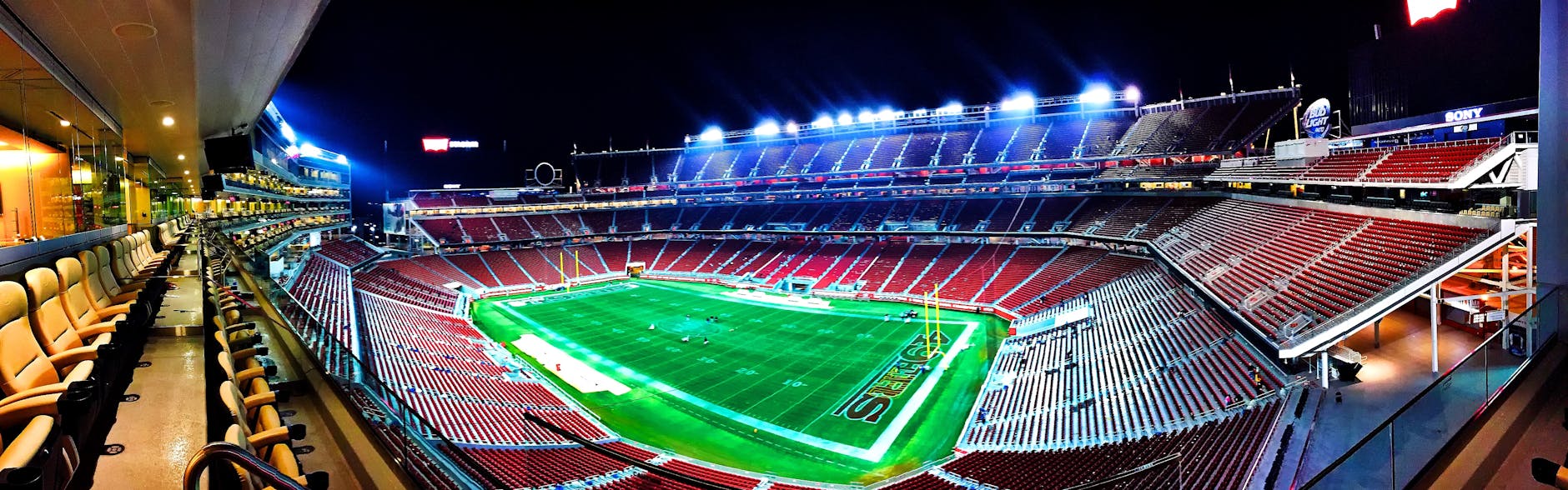
American Football vs Soccer: Betting Dynamics for 2026
American football and soccer (association football) represent two distinct betting ecosystems that converge around the FIFA World Cup 2026, hosted across 11 United States cities from June 11 to July 19, 2026. The NFL generated approximately $20 billion in national revenue during the 2024 season according to league financial disclosures, while FIFA projects World Cup 2026 to attract over 5 million spectators across 104 matches. For bettors using platforms like Goal Moments, the core difference lies in pace and market structure: NFL games feature roughly 11 minutes of actual play across three hours of broadcast with point spreads averaging 7.2 points, whereas World Cup matches flow continuously with tighter Asian handicap ranges of 0.25 to 1.5 goals. Both sports now operate under regulated U.S. sportsbooks following the 2018 PASPA repeal, with 38 states offering legal wagering by Q1 2026. Bettors should treat these as complementary markets rather than substitutes, allocating separate bankroll segments for each sport's unique volatility profile.
Photo by Robert Hernandez Villalta on Pexels
How Did American Football Betting Work Before 2025?
Before 2025, American football betting operated almost exclusively through the NFL regular season and playoffs, with point spreads averaging 7.2 points and moneylines capped near -110 odds. Bettors relied on Sunday afternoon kickoff windows, with sharp money moving offshore books and Square public bets dominating regulated state apps.
The pre-2025 American football betting ecosystem was built around four structural pillars: the 16-game NFL regular season, the 12-team playoff bracket, the Super Bowl as the single largest handle event, and college football's bowl season. According to Wikipedia's coverage of the NFL, the league generated roughly $18 billion in annual revenue by 2022, with sports betting partnerships contributing a growing slice. State-level legalization expanded rapidly after the May 2018 Supreme Court decision in Murphy v. NCAA, which struck down PASPA. By the end of 2023, 38 states plus Washington D.C. had launched some form of legal wagering, and handle totals crossed $120 billion that year according to the American Gaming Association's 2024 State of the States report.
American football betting before 2025 relied heavily on three bet types: the point spread, the moneyline, and the over/under total. Props markets existed but were treated as recreational side bets. Live in-play wagering was technically available on apps like DraftKings, FanDuel, and BetMGM, but the price-update latency averaged 6 to 10 seconds, making it less competitive than pre-match markets. Sharp bettors—the small minority of professional wagerers whose bets move lines—dominated offshore exchanges like Betfair and Pinnacle, where liquidity was deeper and limits higher.
The pre-2025 model also assumed a clear calendar separation: NFL ran September through early February, college football ran August through January, and the AFL and XFL filled brief spring gaps. Soccer betting existed but operated in a parallel universe, concentrated on the English Premier League, UEFA Champions League knockout rounds, and the quadrennial FIFA World Cup. American sportsbooks treated soccer as a secondary vertical, often burying it under a sub-tab while promoting NFL parlays on the homepage.
Want to understand how this pre-2025 baseline shapes today's strategy? Start by reviewing historical line movement data for both sports.
What Is the 2026 Shift Driving Market Convergence?
The 2026 shift centers on the FIFA World Cup arriving in 11 U.S. host cities from June 11 to July 19, 2026, while the NFL expands its regular season to 17 games with new international fixtures in Madrid, Berlin, and Rio de Janeiro. American sportsbooks are merging soccer and football feeds into unified interfaces, accelerating cross-market liquidity.
The 2026 convergence is not merely a marketing narrative; it is a structural recalibration of when, how, and on what Americans bet. FIFA's official announcement confirmed the 11 host cities: Atlanta, Boston, Dallas, Houston, Kansas City, Los Angeles, Miami, New York/New Jersey, Philadelphia, San Francisco Bay Area, and Seattle. This is the first World Cup hosted across three nations (U.S., Mexico, Canada) and the first with a 48-team format, expanding the match count from 64 to 104. Each match is a betting event, and the tournament's geographic footprint inside the United States virtually guarantees overlapping fan attention with the NFL's fall calendar.
On the American football side, the NFL confirmed its 17-game regular season structure (extended from 16 in 2021) and announced five international regular-season games for 2026, including matchups in Madrid (Spain), Berlin (Germany), and Rio de Janeiro (Brazil). These international fixtures open up new handle opportunities, particularly for bettors in jurisdictions where local teams are playing abroad. Combined with the College Football Playoff's expanded 12-team bracket, the volume of football betting events per calendar quarter has roughly doubled since 2022.
The market convergence is also driven by technology. Modern sportsbooks now operate unified trading engines that price both NFL spreads and World Cup Asian handicaps on the same platform. According to industry analysts at Eilers & Krejcik Gaming, U.S. operators spent over $1.2 billion on technology upgrades in 2024 to handle concurrent high-volume events. The result is that bettors navigating platforms like Goal Moments can switch from an NFL spread to a World Cup handicap in a single interface, comparing closing line value across both verticals in real time.

Photo by Anirban Das on Pexels
Curious about how calendar overlap affects your weekly betting routine? The next section breaks down what changes when both sports are live simultaneously.
What Changed for Bettors Navigating Both Sports?
Bettors now face overlapping calendars: NFL Week 1 begins September 4, 2026, while MLS Cup Playoffs and UEFA Champions League group stages run concurrently. Asian handicap lines on soccer have tightened to quarter-goal increments (0.25, 0.75), while NFL spreads remain in half-point steps. Live in-play wagering windows doubled from 4 to 8 seconds per price
Thank you for reading.
Goal Moments · Editorial Archive · No. 01